
About Mom’s Lifeline
Nice to meet you, I am Erica Lötter
About Mom’s Lifeline | Certified In-Home Baby Sleep Consultant
Every family is unique. What brings peace to one home might not work in yours, and what soothes one baby might leave another wide awake.
At Mom’s Lifeline, we reject one-size-fits-all, generic internet programs. We provide expert, highly personalized baby sleep consultancy tailored to the exact needs, temperament, and reality of your individual family.

The Empathetic Expert
Real, Hands-On Help: In-Home Baby Sleep Training in the Western Cape
While most sleep coaches only offer online consultations, the core model of Mom’s Lifeline is built around real, physical support. I personally come into your home to assist with sleep training in your child’s actual everyday environment.
Whether you need a baby sleep coach in Cape Town to evaluate your nursery setup or hands-on guidance during bedtime, I am right there with you. I travel directly to clients across most parts of the Western Cape, including:
- Cape Town Metro: Northern Suburbs, Southern Suburbs, and the Atlantic Seaboard.
- Helderberg & Winelands: Somerset West, Paarl, and surrounding areas.
- Regional Hubs: The West Coast, Worcester, and the Overberg region.
Nationwide South African Sleep Consultations
Do you live outside of the Western Cape? We have you covered. While we offer highly effective online consultations for long-distance clients, I also travel to other provinces across South Africa for in-home consultations by special arrangement (with travel costs covered by the client). Wherever you are in SA, you can access premium, face-to-face reassurance and expert guidance.
Our Philosophy: Responsive Baby Sleep Training
We believe that teaching your child to sleep should never come at the expense of their emotional attachment.
Through extensive research, Mom’s Lifeline established a core guiding principle: a baby should never be left to cry continuously without seeing, feeling, and hearing their caretaker for more than three minutes at a time.
Our gentle sleep training methods are built entirely around this rule. Unlike traditional cry-it-outmethods, our programs ensure both parent and child remain calm and in control. By maintaining this responsive, attentive parenting style, your baby or toddler never feels abandoned. Instead, they feel securely attached and loved as they learn to love sleep.
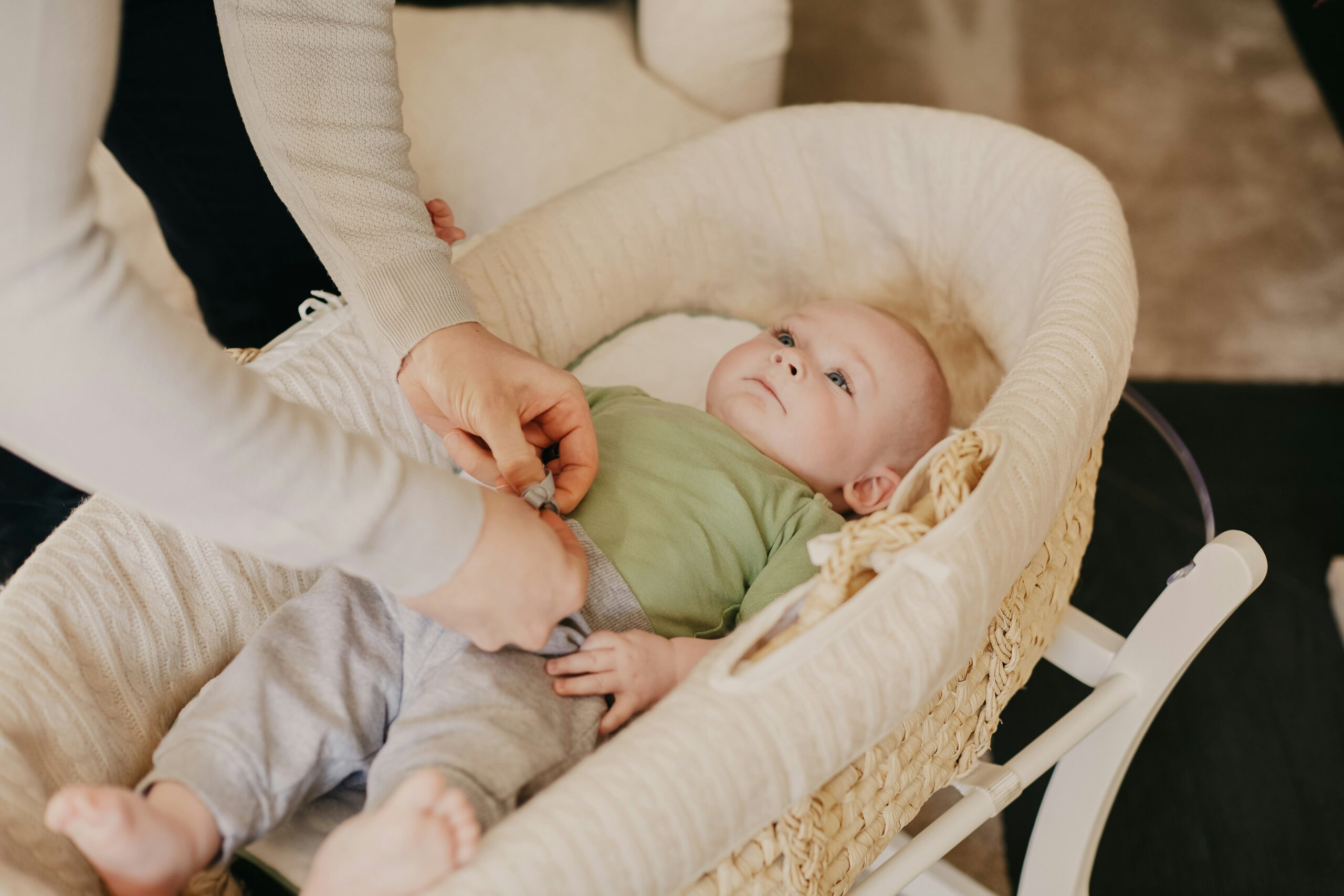

Specialized Sleep Solutions for Babies and Toddlers
We help you create a positive, predictable sleep environment right in your own home. Our customized programs empower your child to:
- Learn how to get baby to sleep through the night.
- Master the skill of self-settling and falling asleep independently.
- Link sleep cycles naturally for longer, uninterrupted daytime naps.
- Overcome the dreaded 4-month sleep regression and toddler bedtime battles.
Let a dedicated in-home infant sleep specialist help your family get the rest you deserve, so your well-rested, well-adjusted child can thrive.
Specialized Sleep Solutions for Babies and Toddlers
We help you create a positive, predictable sleep environment right in your own home. Our customized programs empower your child to:
- Learn how to get baby to sleep through the night.
- Master the skill of self-settling and falling asleep independently.
- Link sleep cycles naturally for longer, uninterrupted daytime naps.
- Overcome the dreaded 4-month sleep regression and toddler bedtime battles.
Let a dedicated in-home infant sleep specialist help your family get the rest you deserve, so your well-rested, well-adjusted child can thrive.
You don’t have to do this alone
If you’re exhausted, overwhelmed, or unsure where to start — help is here.
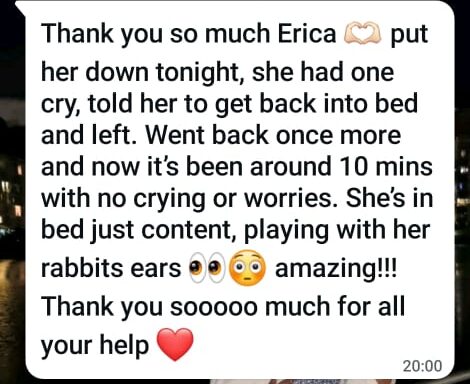
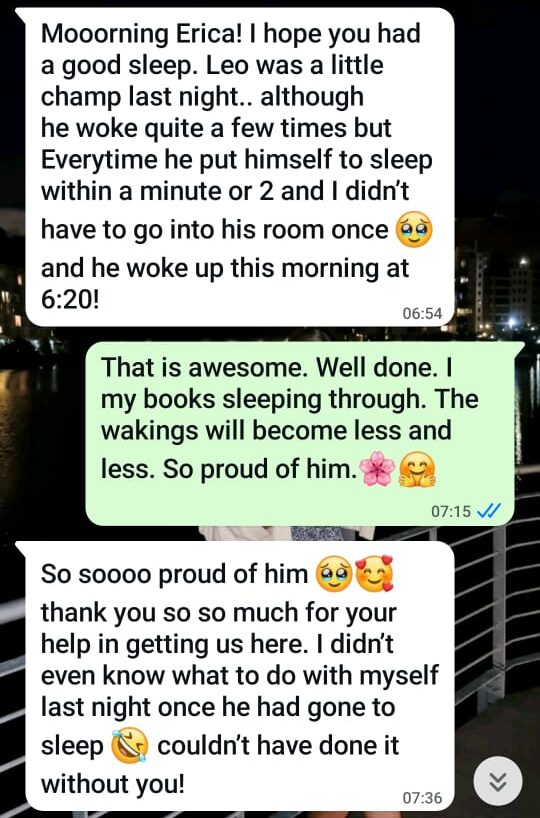
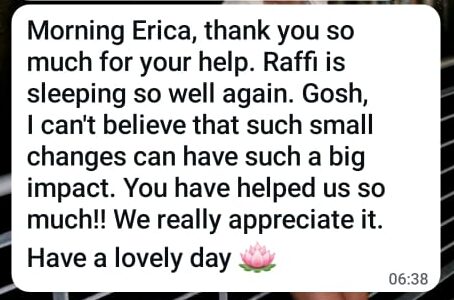
Messages from Rested Moms



Trusted By




Notable clients include: Zolani, Joanne Strauss, Grundling, Quanita Adams, Ilse Lee van Schalkwyk, Anton Rupert — and many wonderful families across South Africa.
Frequently Asked Questions
When you feed a baby is not a problem. As long as you do not feed a baby until they are asleep, because this will become your baby’s sleep association.
By approximately 8 weeks of age (for a full-term baby) infants have the capacity to learn from repetition. This means they can learn that a bedtime routine ultimately leads to falling asleep.
Generally speaking, a bedtime routine should last about 30 to 45 minutes from start to finish. Dinner is not part of a bedtime routine and should be at least an hour before last bottle. Most babies it is effective to kick off a bedtime routine with closing the curtains and getting the night feed ready (if not breastfeeding) and then run the bath as babies love getting naked and taking a warm bath and find it enjoyable and relaxing. It is also a great way to transition from the daytime to the night-time. This routine may include a massage, getting the baby in his or her pajamas, reading or singing a song and feeding. The real key at this point is ensuring that your baby are not fully asleep by the time you put her down in her sleep environment to sleep. It is important that she put herself to sleep the last little bit.
As you cannot prevent a human being from waking up at night, the problem is not waking up, but what needs to happen when baby is ready to go back to sleep. From around 16 weeks, babies have the ability to have uninterrupted sleep and link sleep cycles if all needs are met. Remember, for parents of preemies, they should calculate weeks old from their baby’s due date. A small percentage of babies at 4 months continue to need one-night feeding, but generally speaking, they should be able to consolidate their sleep into two long stretches with a feeding in the middle of the night.
Yes, it does. To the extent possible it is best to have your baby sleeping flat on their backs in their beds. The more consistent you are about keeping your child’s sleeping environment the same, the more likely they are to take sleep easily in that place. Going down in a consistent, motion-free spot for sleep as much as possible sends cue to a baby’s brain sleep is to come.
A baby’s brain is developing when they sleep. This is when growth hormones are releases and skills and abilities becomes memories. Also during this time the body and mind are restoring. If baby get too little sleep, they get very fussy and become easily over stimulated. There are many longterm negative effects associated with poor sleep habits during childhood.
As melatonin, the sleep hormone, release in your body when your body comes into contact with darkness, it is helpful to ensure the sleep environment for baby is as dark as possible. The ideal room temp is between 19 and 22 degrees. A room that has been ventilated to ensure enough fresh air for the night has many benefits. White noise can assist with eliminating any sudden noises. Remove any mobiles or toys from the baby’s cot. This will over stimulate or confuse baby that it’s playtime as opposed to bedtime.
There are sleep training programmes and then is there Mom’s Lifeline Sleep Training programme. We believe in creating an environment that is positive to acquire the skill to learn how to fall asleep with emotional attachment to the parent. As it is difficult to change the current with the new, without some resistance in the form of crying from your baby, we never allow a baby to cry for longer than 3 minutes max without seeing, feeling or hearing their parents. Crying is normal for a baby as it is their communication with parents. It is what we do when they cry, that become the problem.